Hip Roof Cost: 2026 Prices, Cost Factors and What to Expect
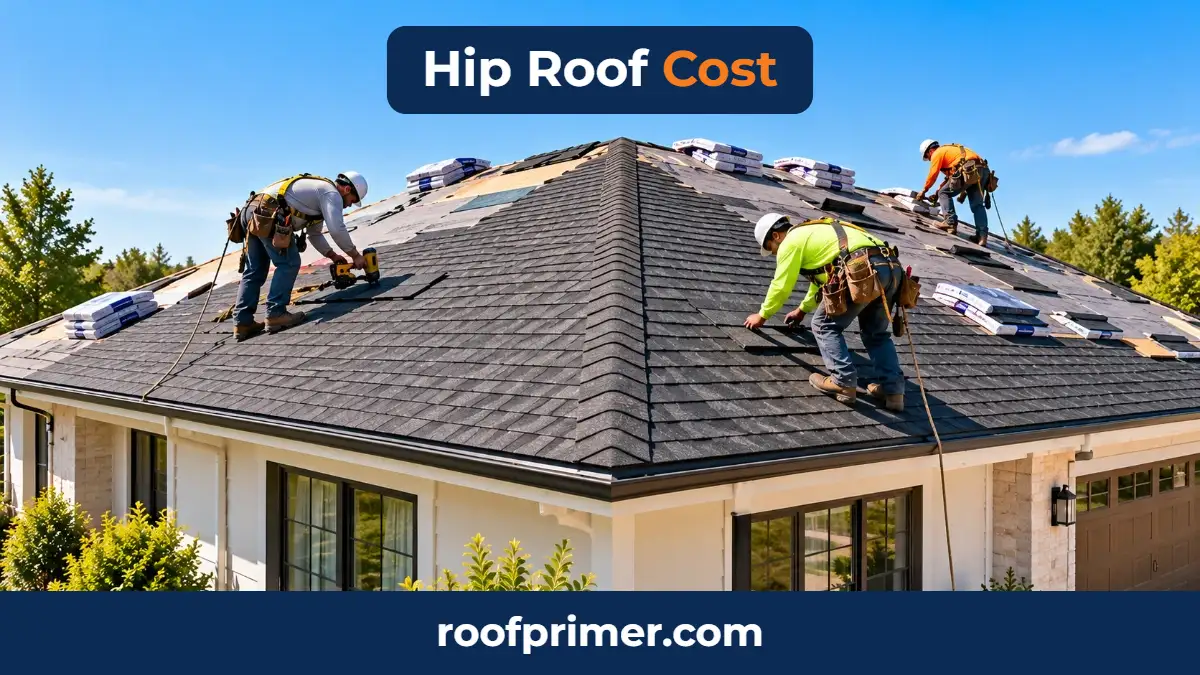
Hip roof cost depends mostly on roof size, pitch, material and how many hips and valleys the design has. For context, GAF reports a 2025 national average roof replacement cost of $17,631, based on Verisk’s U.S. Roof Report. Cost guides from Angi and HomeAdvisor put the typical installed price at about $4 to $11 per square foot in 2026.
A hip roof usually lands on the higher side of those ranges. This guide explains what drives hip roof cost, breaks down the labor and material factors, compares hip roof vs gable roof cost, and shows worked examples so you can estimate your own project before you call for quotes.
How Much Does a Hip Roof Cost?
There’s no single price, because national figures vary by source and method. Here are the main reference points for 2026:
| Measure | Figure | Source |
|---|---|---|
| National average roof replacement | $17,631 | GAF, citing Verisk’s 2025 U.S. Roof Report |
| Average roof replacement | $9,609 | Angi and HomeAdvisor, 2026 |
| Typical installed price | $4 to $11 per sq ft | Angi and HomeAdvisor, 2026 |
| Typical cost by roof size | $4,900 for 1,120 sq ft up to $41,900 for 3,805 sq ft | Angi, March 2026 |
The two national averages differ because they measure different sets of projects. Use them as context, not as a quote for your home.
Hip Roof Replacement Cost
Most homeowners searching for hip roof cost are replacing an existing roof. That job includes tearing off the old roofing, repairing any damaged decking, and installing new underlayment, flashing, roofing and hip and ridge caps. The framing stays in place.
Hip Roof Building Cost (New Construction)
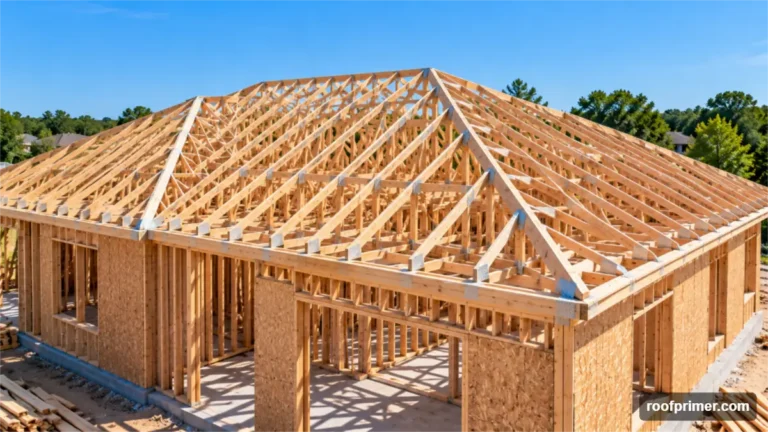
For new builds, hip roof cost includes framing on top of the roofing itself. HomeAdvisor lists a whole-home roof truss package at $7,500 to $35,000 in 2026, with an average of $16,500. That figure covers the trusses only, so the roofing materials and labor come on top.
Cost per Square Foot and per Roofing Square
Roofers price by the “square,” which GAF defines as 100 square feet of roof surface. At $4 to $11 per square foot, that works out to roughly $400 to $1,100 per square. Remember that roof square footage is larger than the house’s floor area, because of overhangs and slope.
Cost Breakdown: Materials, Labor and Extras
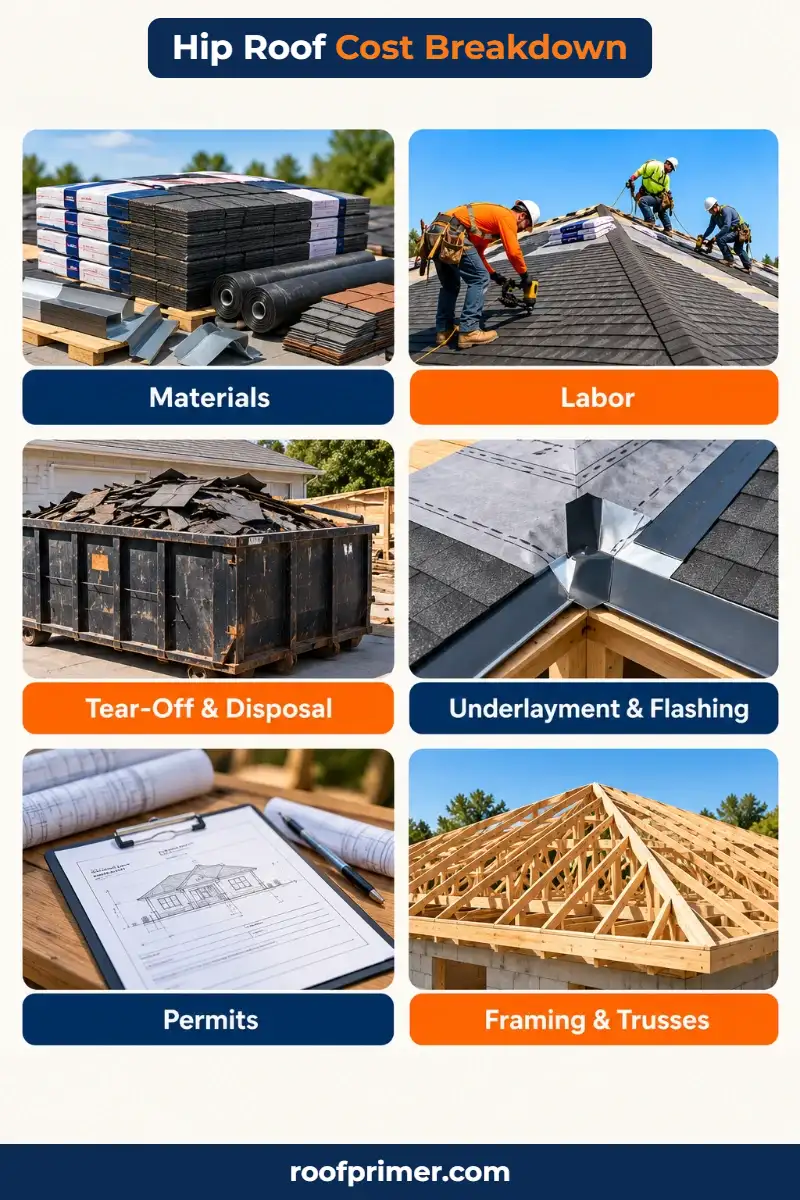
Every hip roof cost estimate breaks down into the same basic parts.
Materials
Roofing material is usually the largest single line item in hip roof cost. The per-square-foot prices by material are in the material section below.
Labor
Labor weighs heavily on hip roof cost because complex roofs take longer to shingle. HomeAdvisor lists roofing labor at about $200 to $300 per square, excluding materials, and Angi lists roofing crews at $40 to $90 per hour per worker. For context on wages, the U.S. Bureau of Labor Statistics (BLS) reports a median roofer pay of $26.65 per hour as of May 2025. Contractor rates are higher than worker wages because they cover insurance, equipment, overhead and profit.
Tear-Off and Disposal
HomeAdvisor estimates $1,000 to $3,000 for removal labor and $500 to $1,500 for hauling and disposal, or about $1,500 to $4,500 together.
Framing and Trusses (New Builds)
For new construction, HomeAdvisor lists hip trusses at $100 to $400 each. Setting trusses runs $25 to $75 per hour, and a crane adds $300 to $1,000. Heavy snow loads can raise truss costs by up to 25%.
Underlayment, Flashing, Ventilation and Permits
These items are smaller but add up:
- Underlayment and ice barrier along the eaves
- Hip and ridge cap shingles
- Valley, wall and chimney flashing
- Ventilation upgrades
- Permits, which Angi lists at $100 to $1,400 depending on the city
Worked Cost Example
Here’s how to estimate hip roof cost for a typical house. Take a one-story, 1,500 sq ft house measuring 30 by 50 feet, with 1.5-foot overhangs and a 6:12 hip roof:
- Roof footprint with overhangs: 33 × 53 ft = 1,749 sq ft
- Apply the pitch factor: 1,749 × 1.118 (for 6:12) = about 1,955 sq ft, or 19.6 squares
- Multiply by the asphalt shingle rate: 1,955 × $3 to $7 = about $5,900 to $13,700 before waste, tear-off, permits and extras
The pitch factor is the square root of (rise² + 12²) divided by 12. Common values are 1.054 for 4:12, 1.118 for 6:12, 1.202 for 8:12 and 1.414 for 12:12.
Labor and Material Factors That Affect Price
These labor and material factors explain why hip roof cost varies so much from one house to the next.
Roof Size and How It’s Measured
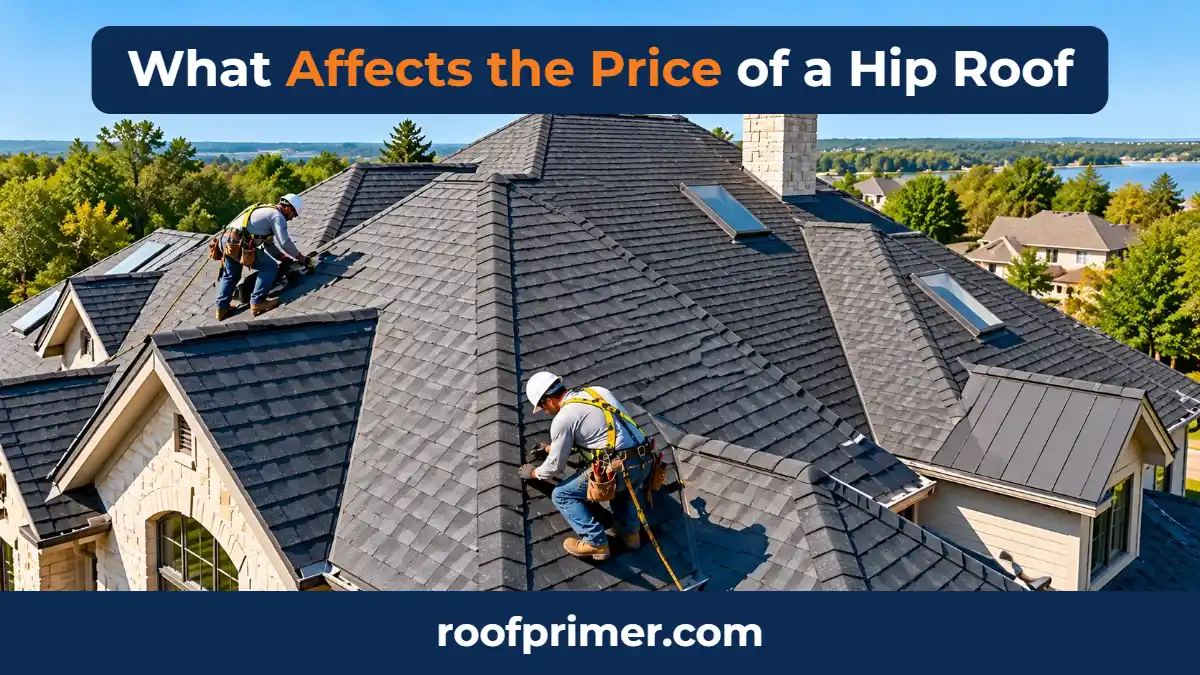
GAF calls roof size “the biggest cost factor.” Roofers measure the roof surface, not the floor plan, using tape measurements, aerial imagery or drone inspections. A two-story home has a smaller roof than a one-story home with the same floor area.
Roof Pitch and Steepness
Pitch affects hip roof cost in two ways: a steeper pitch increases roof area and slows the crew. Angi notes that a steep pitch adds roughly $1,000 to $3,000 in labor and materials, and GAF says slopes greater than about 8:12 require specialized safety equipment.
Number of Hips, Valleys and Penetrations
This is where hip roof cost differs most from simpler designs. Every hip needs cap shingles, every valley needs membrane and flashing, and every vent, skylight and chimney needs flashing. GAF notes that roofs with many intersecting planes take longer because crews must cut more shingles.
Hip Roof Type
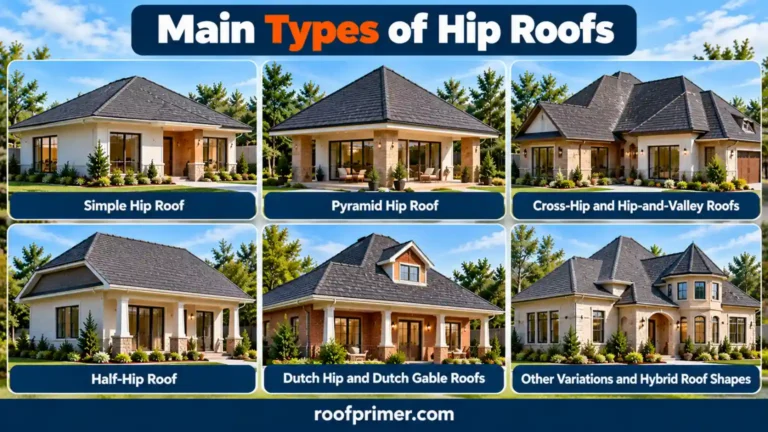
The roof type drives complexity:
- Simple hip: one ridge, four slopes and no valleys
- Pyramid: four slopes meeting at a point
- Cross-hipped and hip-and-valley: add valleys
- Dutch gable: adds a small gable wall
- Mansard: adds a change in pitch on every side
The more sections a roof has, the higher the cost.
Roofing Material Choice
GAF notes that asphalt is typically the least expensive option, while metal, wood, slate, clay and solar roofing cost more.
Deck Condition and Repairs
Rotted or damaged decking must be replaced before new roofing goes on. GAF notes this can add a few hours to an extra day of work, plus material cost.
Location, Season and Local Labor Rates
GAF lists cost of living, climate, local codes and permit requirements as location factors. BLS notes that roofing work may be limited in winter in northern states and that crews often work overtime in busy summer months.
Code and High-Wind Requirements
In hurricane areas, extra steps add to hip roof cost but protect the roof. The IBHS FORTIFIED Roof standard calls for:
- A sealed roof deck
- Ring-shank nails
- A wider drip edge
- Shingles rated ASTM D3161 Class F or ASTM D7158 Class H
Prices by Roofing Material
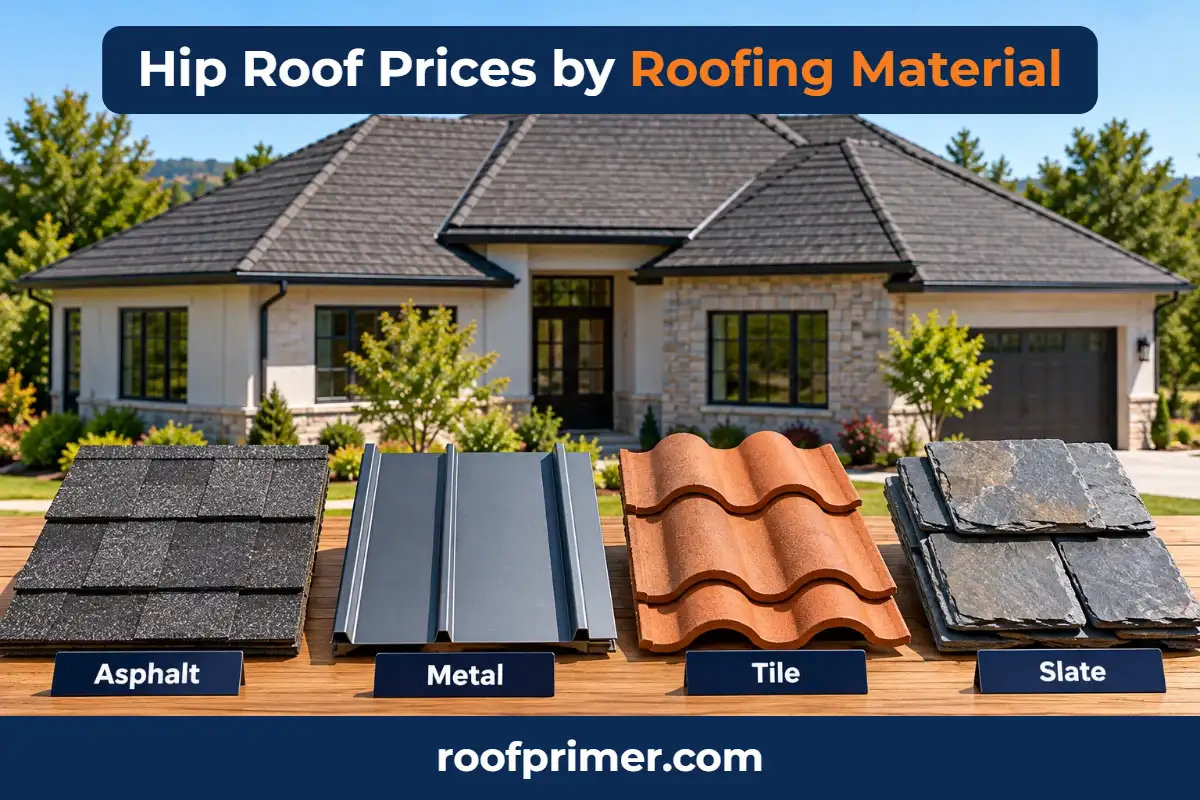
Material choice can more than double hip roof cost. These are HomeAdvisor’s installed price ranges per square foot, updated June 2026:
| Material | Cost per Sq Ft (Installed) |
|---|---|
| Asphalt shingles | $3 to $7 |
| Architectural shingles | $4 to $6 |
| Synthetic | $5 to $12 |
| Wood shakes | $6 to $13 |
| Metal | $7 to $13 |
| Standing-seam metal | $4 to $30 |
| Tile (clay or concrete) | $10 to $20 |
| Slate or stone | $15 to $30 |
Asphalt Shingles
Asphalt shingles are the most affordable and most common choice. On a hip roof, budget for dedicated hip and ridge cap shingles along every hip.
Metal Roofing
Metal costs more upfront, and every hip needs custom trim. Standing-seam pricing varies widely with panel type and gauge.
Clay and Concrete Tile
Tile is heavy, so the framing must be designed for its weight. It also needs at least a 2½:12 pitch under the IRC, as summarized by the National Roofing Contractors Association (NRCA).
Slate and Synthetic Slate
Natural slate is the most expensive option and needs at least a 4:12 pitch. Synthetic slate gives a similar look at a lower price and weight.
Hip Roof vs Gable Roof Cost
Why Roof Area Is Usually the Same
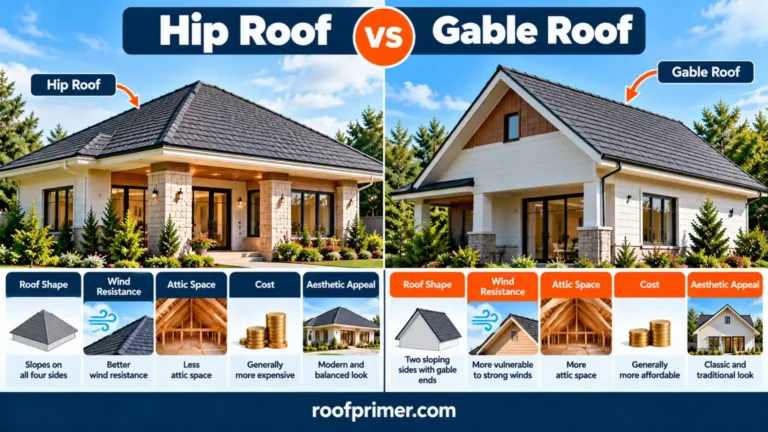
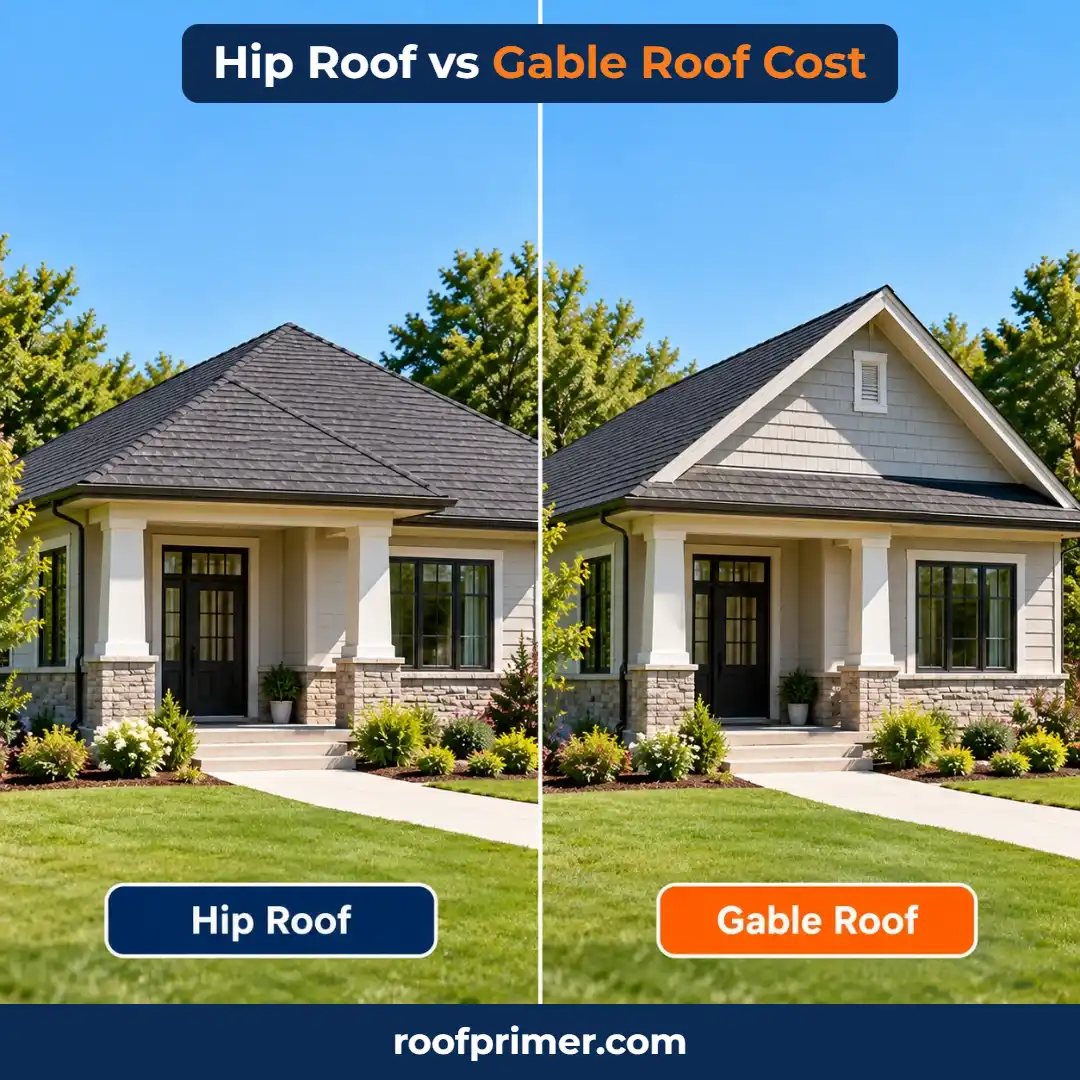
At the same pitch and overhang, a hip roof and a gable roof over the same footprint have about the same surface area. In both cases, area equals the footprint times the pitch factor. So the hip roof cost premium doesn’t come from square footage.
Where the Hip Roof Premium Comes From
- More hip and ridge cap: four hips plus the ridge, instead of one ridge
- More angled cuts: every shingle course meets a hip at an angle, adding cut waste
- More labor time: GAF notes that complex roofs take longer to shingle
- More framing in new builds: hip and jack rafters or hip trusses
PNNL, which runs the DOE’s Building America Solution Center, lists hip roofs as more complicated and more expensive than gable roofs.
Costs a Gable Roof Has That a Hip Roof Doesn’t
A gable roof has triangular end walls that need siding and trim. In high-wind areas, PNNL and IBHS also call for extra gable end bracing. These costs narrow the gap.
Quick Comparison
| Factor | Hip Roof | Gable Roof |
|---|---|---|
| Roof surface area | About the same at equal pitch | About the same at equal pitch |
| Hip and ridge cap | Ridge plus four hips | Ridge only |
| Cut waste and labor | Higher | Lower |
| Gable end walls | None | Siding, trim and bracing |
| Framing (new builds) | More complex | Simpler |
| Possible insurance credits | Often in hurricane states | Less likely |
Long-Term and Hidden Costs
Some parts of hip roof cost show up after installation.
Ventilation Upgrades
A hip roof’s short ridge leaves less room for ridge vents. The IRC generally requires 1 square foot of net free vent area per 150 square feet of attic, or 1 per 300 with balanced vents. Adding vents during a replacement is cheaper than adding them later.
Maintenance and Repair Costs
Angi lists a roof inspection at about $240 on average. GAF recommends inspections at least twice a year, ideally in spring and fall. On a hip roof, check the hip caps, valleys and flashing first, since these are the most common repair points.
Roof Cleaning Costs
Gutters run on all four sides of a hip roof, so there’s more gutter length to clean. Clogged gutters cause overflow and, in cold climates, add to ice buildup at the eaves.
Energy Efficiency and Cool Roof Upgrades
ENERGY STAR notes that a white roof can stay about 50°F cooler on a summer afternoon than a gray one, and cool roof products now come in more colors. In cold climates, the DOE recommends air sealing, attic insulation and an eave membrane to prevent ice dams, which matters on a hip roof’s long eave line.
Solar Panel Considerations
PNNL notes that hip roofs offer less space for solar panels than gables. If solar is planned, ask whether replacing the roof first makes sense, since removing and reinstalling panels later adds cost.
Lifespan and Durability
Lifespan depends on the material and installation, not the roof shape. A hip roof’s lower wind loads can reduce storm damage over time, which helps protect your investment.
Insurance, Warranties and Home Value
Wind Mitigation Discounts
PNNL notes that many insurers offer discounts for hip roofs, sometimes after a wind mitigation inspection. A home generally needs a hip roof over more than 90% of the house to qualify. This can offset part of the hip roof cost over time in hurricane-prone states.
Storm Damage and Insurance Claims
Homeowners policies typically cover roof damage that is sudden and accidental, such as wind, hail or fire. The Maryland Insurance Administration notes they generally don’t pay for wear, aging or gradual deterioration. The NAIC explains the difference in payout:
- Replacement cost value (RCV): pays to repair or replace without deducting for depreciation
- Actual cash value (ACV): pays the depreciated value, which can be far less on an older roof
Manufacturer and Workmanship Warranties
Angi lists extended contractor warranties at $500 to $2,000, and manufacturer warranties at $500 to more than $5,000 if they aren’t included. GAF notes that warranty choice affects your estimate. Ask what each warranty covers and whether it transfers to a new owner.
Home Value
No authoritative source puts a fixed number on how much a hip roof adds to home value. A new roof in good condition matters most to buyers and inspectors.
Financing a New Hip Roof
Many roofing contractors offer financing through third-party lenders, and some advertise prequalification without a hard credit check. Compare the total repaid, not just the monthly payment. Some homeowners also use home equity loans or lines of credit.
How to Get and Compare Roofing Estimates
The only way to pin down your hip roof cost is with local quotes.
What a Detailed Quote Should Include
- Roof area in squares and the pitch
- Material brand, product line and color
- Tear-off and disposal
- Deck repair price per sheet
- Underlayment and ice barrier
- Hip and ridge cap product
- Valley, wall and chimney flashing
- Ventilation
- Permits
- Warranty terms
Red Flags in Low Bids
A bid far below the others often leaves out deck repair, ice barrier, flashing replacement, dedicated hip and ridge caps or permits. Compare quotes line by line for the same scope.
Questions to Ask Before Hiring a Roofer
- Are you licensed and insured where I live?
- How many squares did you measure, and how?
- How will you flash the valleys and walls?
- What hip and ridge cap product do you use?
- Do you install to FORTIFIED or similar high-wind standards?
- What happens if you find rotted decking?
How to Lower Your Roof Cost Without Cutting Corners
These steps can trim hip roof cost without weakening the roof.
- Get three or more itemized quotes for the same scope.
- Schedule outside peak season where local weather allows.
- Replace the roof before installing solar, not after.
- Choose a simpler roof design on new builds, with fewer valleys and gables.
- Fix ventilation during the replacement instead of later.
- Ask your insurer about wind mitigation credits before you start.
Is a Hip Roof Worth the Cost?
In hurricane and high-wind areas, it usually is. PNNL cites wind tunnel studies showing peak wind pressures up to 50% lower than on gable roofs, and insurance credits can offset part of the higher hip roof cost. In mild climates, or if you need attic space or a tight budget, a gable roof often delivers more value per dollar.
Conclusion
Hip roof cost comes down to measurable factors: roof area after pitch, the number of hips and valleys, material, tear-off and local labor rates. A hip roof costs more than a comparable gable roof because of extra cap material, cut waste, labor and framing, not because it has more surface area. Use the worked example and material table to set a budget, then compare at least three itemized quotes for the same scope of work.
Frequently Asked Questions
Is a hip roof more expensive?
Yes, usually. PNNL describes hip roofs as more complicated and more expensive than gable roofs, mainly because of extra cap material, angled cuts, labor and framing.
Is $30,000 too much for a roof?
Not necessarily. It’s well above GAF’s $17,631 national average, but Angi’s 2026 data shows roofs from about 2,700 to 3,800 sq ft reaching $29,500 to $41,900 at the high end. Large roofs, metal or tile, steep pitches and complex hip and valley designs can justify that price. Compare itemized quotes before deciding.
How much should a 1,500 sq ft roof cost?
For roof area, Angi’s 2026 data shows about $6,800 to $17,200 for a 1,565 sq ft roof. If 1,500 sq ft is your house’s floor area, the roof is larger. The worked example in this guide shows a one-story 1,500 sq ft house with a 6:12 hip roof reaching about 1,955 sq ft of roof, or about $5,900 to $13,700 in asphalt shingles before extras.
How much does it cost to replace a roof on a 2,200 square foot house?
It depends on the number of stories. A one-story 40-by-55-foot house with 1.5-foot overhangs and a 6:12 hip roof has about 2,790 sq ft of roof, or roughly $8,400 to $19,500 in asphalt shingles. A two-story house with the same floor area has about 1,470 sq ft of roof, or roughly $4,400 to $10,300, before tear-off, permits and extras.
What are the disadvantages of a hip roof?
The main disadvantages are higher cost, more complex framing, less attic space, less room for solar and ridge vents, and more hips and valleys to flash.
What is the 25% rule for roofing?
It’s a Florida Building Code rule. It limits repairs, replacement or recovering to no more than 25% of a roof or roof section in any 12-month period. Beyond that, the whole roof or section must meet current code. Since May 27, 2022, an exception applies: if the roof was built or replaced under the 2007 Florida Building Code or later, only the portion being worked on must meet current code. Most other states don’t use this rule.
What is the cheapest month for roofing?
No official source names one cheapest month. BLS notes that roofers are busiest in summer and that work slows in winter in northern states, so off-peak scheduling may help. Cold weather has limits, though: GAF says shingle sealant strips need temperatures above 40°F to activate.
Is a hip roof cheaper to insure?
Often, in hurricane-prone states. PNNL notes that many insurers offer discounts for hip roofs, generally when the hip roof covers more than 90% of the house. Ask your insurer whether a wind mitigation inspection is required.
Do hip roofs last longer?
Not automatically. Lifespan depends on the roofing material, installation, ventilation and maintenance, though lower wind loads can reduce storm damage over time.
How much do hip roof trusses cost?
HomeAdvisor lists hip trusses at $100 to $400 each in 2026, and a whole-home truss package at $7,500 to $35,000.
Does a steeper pitch cost more?
Yes. A steeper pitch adds roof area, which you can see in the pitch factor, and slows the crew. Angi estimates a steep pitch adds roughly $1,000 to $3,000.
Do hip roofs cost more to maintain?
Slightly, because there are more hips, valleys and gutters to inspect. Regular inspections and quick repairs keep those costs small.
How much does it cost to convert a gable roof to a hip roof?
No reliable national figure exists for this kind of hip roof cost. It’s a structural project involving new framing, an engineer’s review, a permit and a new roof covering, so expect it to cost well above a standard replacement. Get detailed quotes.
How long does a hip roof replacement take?
GAF says an asphalt shingle replacement on an average-sized home often takes one to two days. Complex hip and valley roofs, steep pitches, bad weather and deck repairs can add time.
Does homeowners insurance cover hip roof replacement?
Only for sudden, covered damage such as wind, hail or fire. Policies generally don’t pay for wear and aging, and an actual cash value policy pays less on an older roof than a replacement cost policy.